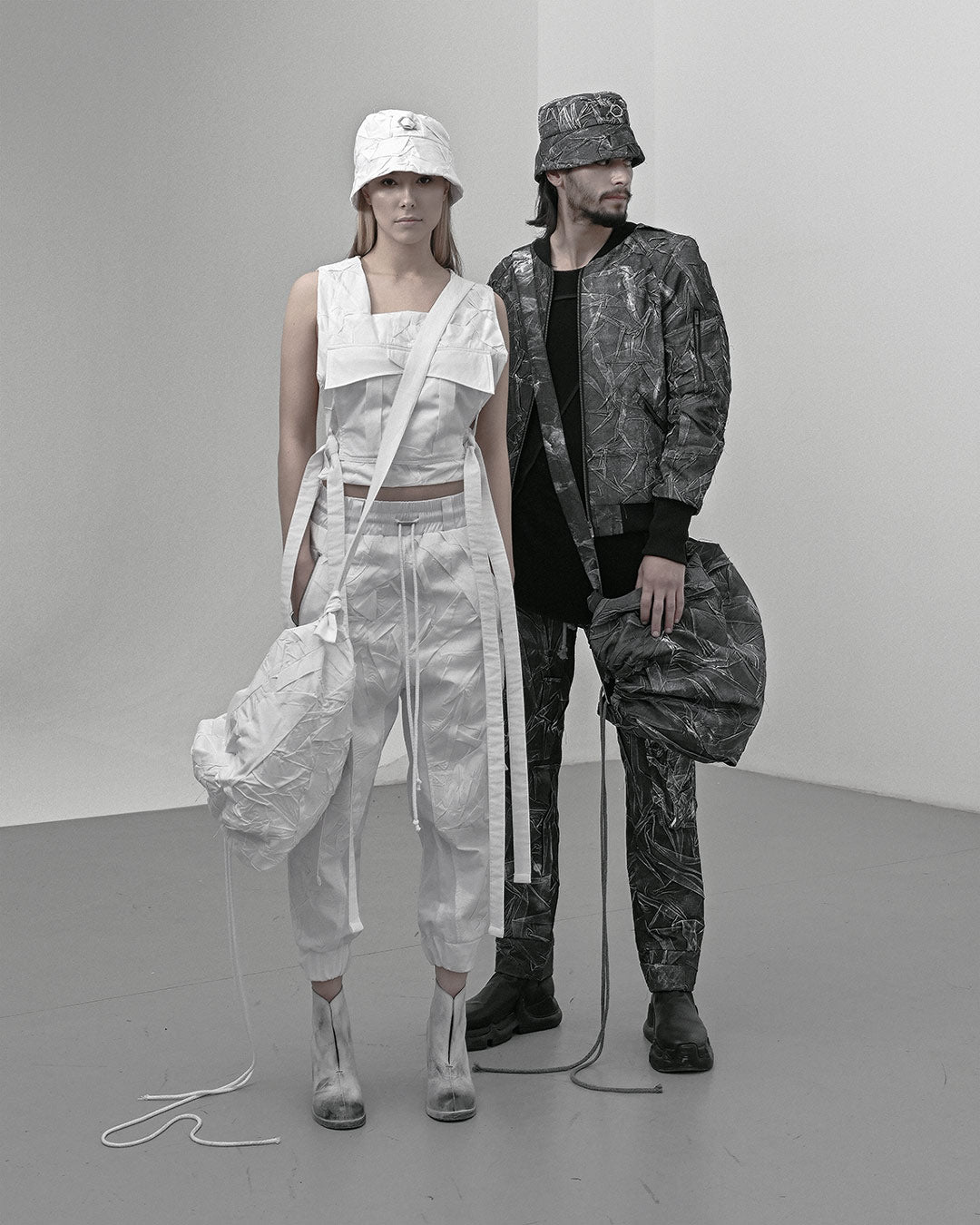
Technical breakdown
A sketch is not a product. It is a two-dimensional representation of a three-dimensional object, and the distance between those two things is where most development problems begin.
Turning a design into a production pattern is an engineering process. The pattern maker is not drawing - they are solving a set of engineering problems simultaneously: how the fabric will behave, how the body moves, and how the construction holds. Understanding what that translation involves is the first step toward running a development process that does not stall.
Starting from a block, not from scratch
Professional pattern development does not begin with a blank page. It begins with a block - a master pattern that has already been fitted, tested, and calibrated to your brand’s size specs. When you develop a new top, you manipulate your existing shirt block. The shoulder slope, armhole curve, and wearing ease are already solved. You are adding style on top of a known structure, not guessing at geometry from the beginning.
Brands that start from scratch on every style spend sample rounds re-solving problems that a verified block would have already answered.
What a pattern maker is actually calculating
When a pattern maker reads your sketch, they are working through a set of engineering problems simultaneously.
Fabric behaviour. A design that works in a structured cotton will fail in a fluid silk if the pattern geometry does not account for the difference in drape and stability. The pattern must be engineered for the specific fabric being cut.
Anatomy and movement. A body is not static. The pattern must include enough ease - the difference between garment measurement and body measurement - to allow the wearer to sit, reach, and breathe. How that ease is distributed across the pattern determines whether the garment moves with the body or against it.
Seam logic. The sketch shows exterior lines. The pattern defines the interior: where seams are placed, how they are finished, and how construction sequence affects the final shape.
What a production pattern must contain
A design pattern and a production pattern are not the same document. A production pattern is a final, annotated instruction set ready for the cutting table. Before it reaches the factory, it must include:
- Seam allowances - clearly defined on every edge
- Notches - registration marks that tell the sewer exactly where pieces align; without them, the factory is guessing
- Grainlines - the orientation of the fabric weave; off-grain placement causes twist and hemline drop
- Annotations - piece names, cut quantities, size labels, and any construction notes
A pattern missing any of these is not production-ready. It is a draft.
Expect the first version to be wrong
The first pattern draft is a hypothesis. You cut it, sew it - usually in a substitute fabric - and fit it. The pattern maker then translates the corrections back into the geometry. This iteration is not a sign of failure; it is the process. The question is how many rounds it takes.
Brands that start from verified blocks, communicate fabric details clearly, and provide precise measurement specs reduce that number significantly. Brands that send sketches with no technical information spend those rounds re-learning things that should have been specified before the first cut.
Checklist before sending a design brief to pattern development:
- Sketch shows all seams, closures, topstitching, and pockets clearly
- Fabric sample or specification provided - weight, composition, stretch direction
- Fit model or size spec confirmed
- Existing block identified as starting point where applicable
- Key measurements and ease preferences noted
- Construction preferences called out - seam finish type, interlining, stitch type